
The Langport Transport Group Host the Developing the Exeter to Reading Rail Corridor conference on 27th September 2025 at the GWR Hotel in Taunton
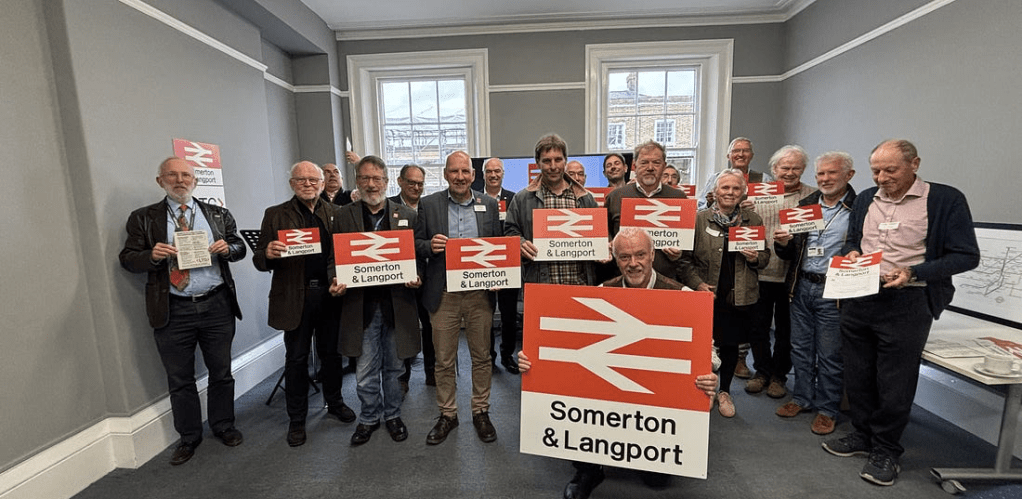
At the end of September the Langport Transport Group (LTG) held a conference to discuss the future of a station for Langport/Somerton. A group of local residents, LTG have been campaigning for over a decade to bring a station to either Langport or Somerton.
It seemed somehow appropriate that the conference was held at the Great Western Station just over the road from Taunton station, making the point of the importance of connectivity. And the fact that attendees from the Langport and Somerton area could only get to a hotel next to a station, via an infrequent bus service or private car, emphasised that point rather well.
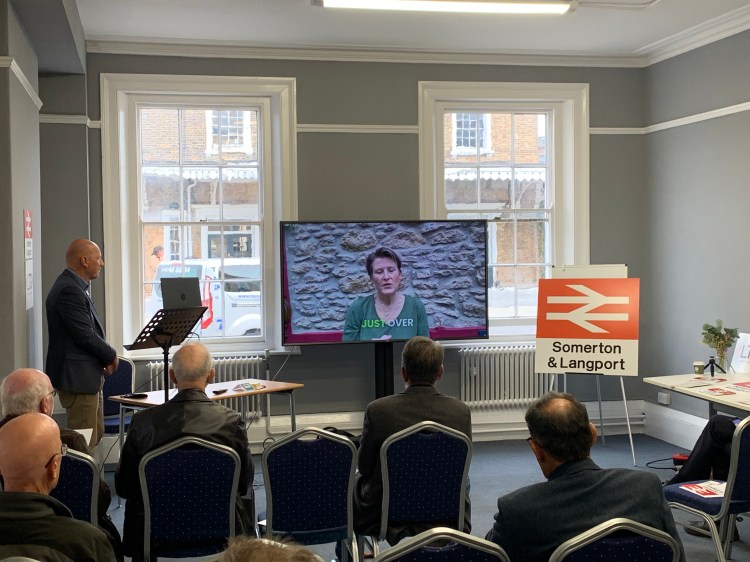
After a warm welcome from our Secretary, Simon Taylor, we were pleased to show a pre-recorded ‘key affirmation’ via video from our MP Sarah Dyke. Sarah pledged her support once again for the campaign and emphasised the importance to our community of being better connected.
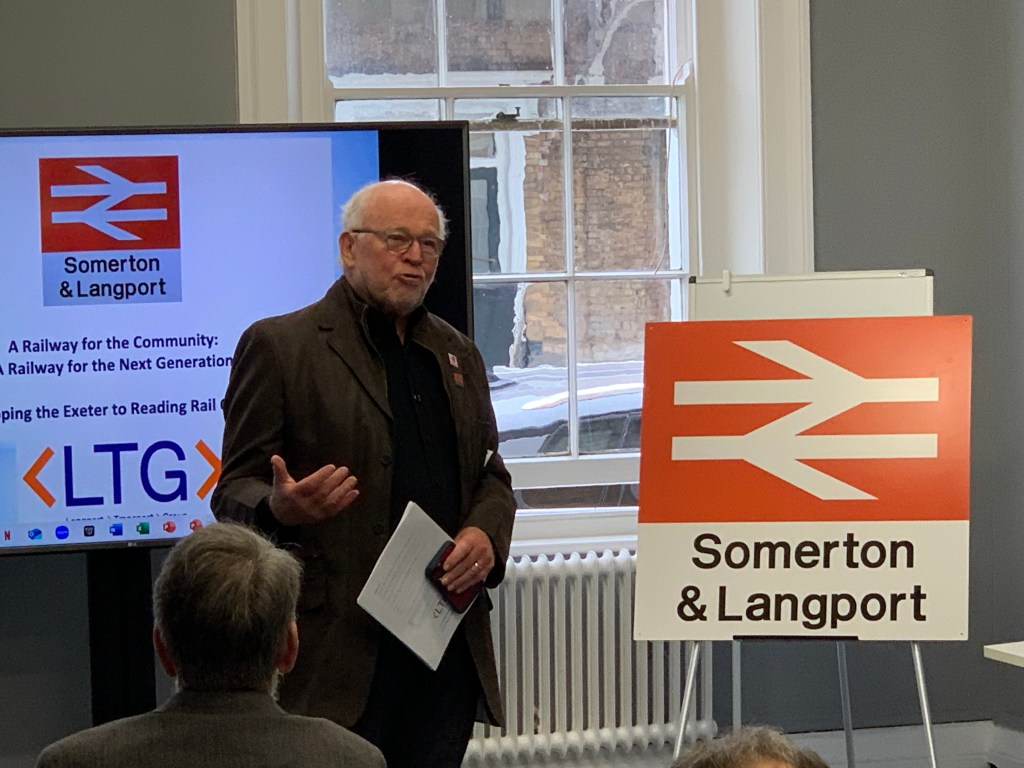
Phil Edge, the LTG Chair gave an overview of the Strategic Outline Business Case and the campaign story so far. Discussion soon settled on the vitality of good transport links for the young people in our communities. A focus on the Exeter to Reading rail corridor as a connected area for economic benefit brings a different perspective. Exploring multi-modal transport connections is also a vital area for improvement.
Brian Q Love from Connected Communities explained how by bringing communities together with business stakeholders with a common vision of tackling rural isolation and increasing opportunity can encourage economic benefit. A case study from a collaboration between the large civil engineer Amey created the Bath and Wiltshire Metro project. An inspirational presentation on how communities connected by the rail network can thrive.
Councillor Richard Wilkins, the Lead for Transport in Somerset and the Vice-Chair of Peninsula Transport focused on tackling rural isolation through integrated mixed-mode public transport. Richard explained how Somerset Council can drive this project by strategic transport planning and operational initiatives – the SLINKY bus service being a great example as well as the Integrated Somerton Transport Hub initiative.
Some of you may have had the impression (we certainly did) that the idea of a station for the Langport/Somerton area was effectively killed off when the Labour Government killed off the Restoring Your Railway fund in July last year. After all, part of that fund was dedicated to opening or reopening rail stations across Britain.
However the LTG conference started by explaining very forcefully that whilst the funding mechanism may have gone, that did not make the opening of news stations a thing of the past.
David Northey, a former Network Rail executive pointed out that despite the closure of the fund, stations for Wellington Collumpton and Portishead had been approved recently.
While the Restoring Your Railway fund was very much dead, every in-progress project to open or reopen a station remains very much alive. This is the view from Whitehall too. It is up to project leaders to look for pathways to make the case, find funding and ultimately receive government blessing.
The LTG conference showed the depth of support for the idea of a railway station in the area. Although unable to be there for personal reasons, Glastonbury & Somerton MP Sarah Dyke sent a message of support via video.
In her video message the MP reminded everyone that the Government had made growth and opportunity the central plank of policy. And without public transport, then both growth and opportunity would wither on the vine.
Representatives from Curry Rivel, Somerton and Langport councils as well as local Somerset Councillors were all in attendance. The Somerset Council Executive Member responsible for Transport, Richard Wilkins (who just happens to be the Somerset Councillor for Langport), gave a presentation to the conference.
David Northey suggested that access to education, especially to a 6th form college, depended on public transport. Without it, whether you live in Minehead or Langport, having a choice of further education colleges would be almost impossible. Given the lack of a station and the poverty of bus services, young students were already having their opportunities and life choices curtailed.

Simon Taylor from LTG followed this up, presenting quotes from pupils in the Okehampton area after their local station reopened in November 2021. All spoke warmly of the increased choice, improved access and what that meant in terms of education, job opportunities and social life. Another new station in the area is scheduled to open in 2026.
To that point the final presentation to the conference was from Ian Baxter a consultant and former Chiltern Trains director. Mr Baxter has been personally involved in the opening of a dozen new stations both for Chiltern and as a consultant.
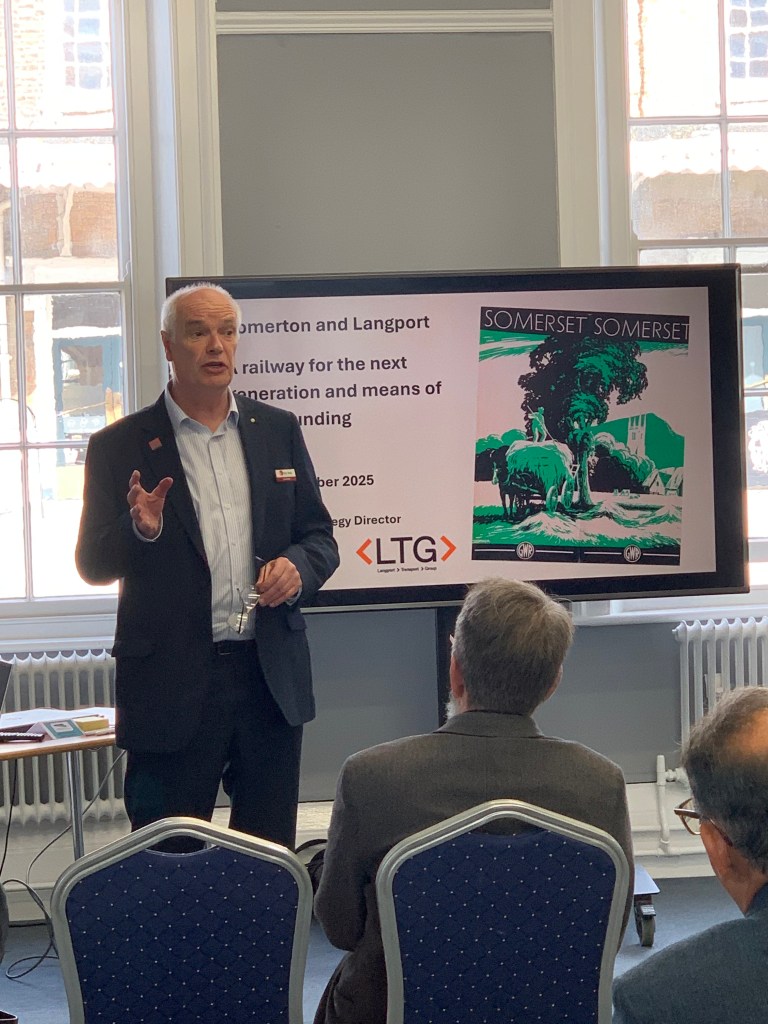
He went through a number of different models that had been used to fund station openings that did not involve central Government funding.
A number of openings for instance had been achieved as a partnership between developers and local authorities. The idea being that once a new station opened, it formed a focal point for new housing.
A local authority might fund the station, invest in the surrounding land and then recoup the capital outlay from the uplift in land values that will inevitably happen as a result of being next to a new station.
Equally developers might joint-fund a station knowing that they could recoup the money both from land value uplift or from the development itself. Both models have been successful in getting new stations opened/reopened in recent years.
In short, Government funding is uncertain and subject to the whims of policy change. But getting a new station does not have to be.
There are other possibilities too. Although Somerset Council managed to miss out on the first round of mayoral authorities, the council will be having another go between now and March 2026 together with would-be mayoral partners Wiltshire, Dorset and Bournemouth Christchurch and Poole.
A mayoral authority for the area will have new powers and new funding streams to go with those powers. Including the ability to work on transport infrastructure including funding new stations.
There is still some way to go on this, but as and when a new mayoral authority is created, it will open up another line of inquiry for those campaigning to bring a station to Langport/Somerton.
The potential new station for the Langport Somerton area was costed at £15m as part of the feasibility study and that was with input from the DfT. These costs, along with other details within the feasibility study, will now be a couple of years out of date.
However the take-home message for residents of the Langport/Somerton area is this:
- the station project is alive
- there needs to be an updated feasibility study that is ready to go at a moment’s notice as and when funds become available
- the project is commercially viable
- there are non-traditional funding models to explore
If you are interested in the project, perhaps one of the 53,000 in the potential station catchment area and want to keep up to date with the station project, to can find out more from the Langport Transport Group here .

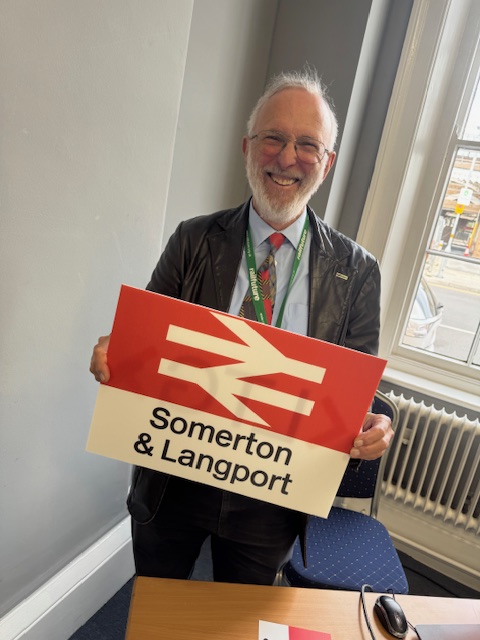

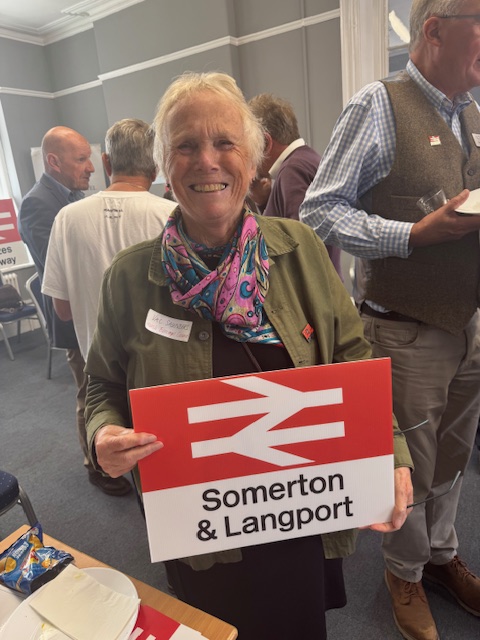
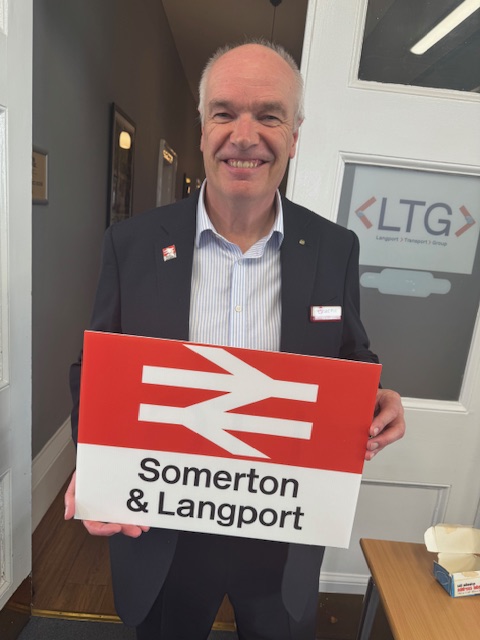

 Langport Transport Group